Saturday, December 14, 2013

Nelson Mandela and Violence

If there's anything reactionaries love to do, it's eulogizing the "nonviolence" of leaders who led liberation struggles. One of the most common criticisms of Nelson Mandela, the ANC, and the anti-Apartheid struggle was their openness to violent tactics. From a 1990 New York Times opinion piece, here is one such instance of this inane criticism:


Understandably, Americans are eager to hear Mr. Mandela's opinions delivered in person, after his release from 27 years of imprisonment. But he, in turn, needs to answer one simple question: Why won't he and the A.N.C. renounce violence?
While armed resistance is justified in certain circumstances, growing violence throughout South Africa now threatens the process of peaceful reform. Clearly, Mr. Mandela's stature should now be used to preach a message of nonviolence and civil disobedience.
(If really want to know what I'm talking about, go to National Review and read the comments on an article about Mandela, if you haven't eaten lately.)

Now, I am not generally in favor of violence. As I see it, at least 95% percent of violence (such as wars between states, in general) is both evil and pointless, something in which no decent person should participate. But what in particular makes a struggle like the anti-Apartheid struggle the object of this criticism? Surely it isn't the innocence or pacifism of the South African government during that era (that government wasn't content to brutalize its own citizens, but engaged in several neo-colonial wars throughout Southern Africa).

So why does Nelson Mandela of all people turn almost everyone into a pacifist? There are people who didn't blink during the shock-and-awe bombing of Baghdad, who would love to "bomb, bomb, bomb, Iran," who are utter moral purists in the case of the anti-Apartheid struggle. Similarly, opinions about the Haitian Revolution or the French Revolution go one way, while (in the US, at least) the American Revolution and the Mexican-American war are generally seen as heroic endeavors, even if we wouldn't do it that way now.

For one thing, there is a strong ideology that supports violence by the state (preferably by one's own state), while abhorring violence by non-state actors as chaotic and terroristic. There is likely also a deeply ingrained racist tendency to view violence by black people as inherently morally suspect (so one hears a great deal about "atrocities" committed by the Haitian revolutionaries, but little about the conditions under which Haitian slaves had lived). And one hears little from critics of Mandela or the ANC about what exactly Apartheid was or who supported it and why.

In any case, if you're wondering why Mandela turned to a such a conciliatory position after the ANC came to power, think about who had the guns at the time. Not black South Africans. The fact that white supremacists often have no qualms about using violence, either legally or nonlegally, has been a defining factor in South African life since the creation of Apartheid in the 1940s.

Saturday, December 7, 2013

US Conservatives and Apartheid in South Africa

I'm not going to write my own account of this, but mainly link to others who have written some pretty thorough summaries of a shocking history. In sum, a who's who list of prominent 1980s conservatives were horribly, horribly wrong about Apartheid and those who opposed it. When we say "white supremacy," we often think of skinheads and neo-Nazis with tattoos. These conservatives supported the kind of society that such white supremacists dream of creating. I don't have any personal anger against these people, but I do think it's important to remember what they said and did in public.

At Foreign Policy, Sam Kleiner names a lot of names and shows just how wide and deep US conservative ambivalence about opposing Apartheid ran.

At The Atlantic, Ta-Nehisi Coates recounts the support for the Apartheid regime by core elements of intellectual conservatism.

At The New Republic, Jordan Michael Smith focuses on the personal attacks of many US conservatives against Nelson Mandela in particular.

One thing to notice in these accounts is the ways in which words like "terrorist" and "communist" are used as if they denote inherently evil and unchanging entities. Such descriptions blind those using them and their audiences, since they don't address concrete realities that shape the nature of political struggles. (That being said, I don't think that "conservatism" itself is responsible for supporting Apartheid, but it is pretty disturbing that such influential people who have described themselves as conservatives did so little to oppose such an unjustifiable social system.)

Update: And then there are the British conservatives.

Wednesday, December 4, 2013

3 Things to Know About the East China Sea Crisis

This November 23rd, China asserted that its air defense zone covered disputed islands in the East China Sea (which China calls the Diaoyu Islands and Japan calls the Senkaku Islands--South Korea has its own claims in the same area).With US, Japanese, and South Korea planes flying in the area, the situation is dangerous to say the least. For US residents worried about a possible conflict in the area, here are three key facts that provide context for this crisis:

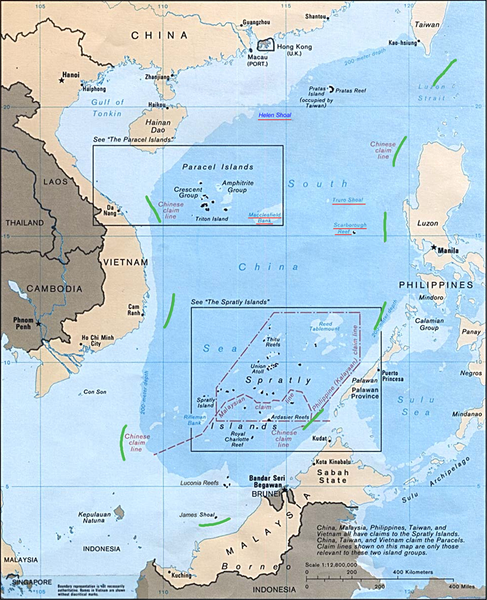
1. As international relations scholars have pointed outChina has border disputes and poor relations on almost every one of its land and sea borders. With the strange exceptions of Pakistan, Myanmar, and North Korea, China has poor relations with every one of its neighbors (and those three are not the ones that China would like to have on its side in an international dispute anyhow). To cite just a few examples, China fought a border war with India in 1962 (China won); China fought a massive border war with Vietnam in 1979, which was tied to Vietnam's invasion of Cambodia and its siding with the Soviet Union in the Sino-Soviet split; and China has ongoing disputes over islands and maritime economic zones in the South China Sea with Vietnam, Malaysia, Brunei, and the Philippines (part of the reason for the ruckus about China not sending enough to the Philippines following the recent typhoon).

2. China's claims to a large maritime area have their roots in China's maritime imperial history, which included receiving tribute from peoples in coastal and island areas for centuries. Today, this takes the shape of a "nine-dotted line" in the South China Sea, as well as East China Sea claims.


This is why China is building aircraft carrier battle groups and why the US is countering China through a massive buildup focused on Guam. For the US, this naval and air power buildup is parallel to the Diego Garcia base that is supposed to control Africa, and the Middle East, and Central Asia. These are the two oceans over which the US wants superiority in order to at least keep sea lanes open, while leaving the opportunity for air strikes in land areas.

3. The US economy is not hostage to China's every whim. There is a false idea that China holds so much US Treasury debt that it can arbitrarily decide to sink the US economy. For one thing, it would suffer even more from losing the US export market than the US would from having to print a bit more money. For another thing, it doesn't hold all that much US public debt. Here are a couple charts on that:


So, although extreme nationalism (and hatred of Japan due to past war crimes and imperialism) may push China to war, it has both foreign relations and economic incentives to not go to war with any of its neighbors in the near future.