1. As international relations scholars have pointed out, China has border disputes and poor relations on almost every one of its land and sea borders. With the strange exceptions of Pakistan, Myanmar, and North Korea, China has poor relations with every one of its neighbors (and those three are not the ones that China would like to have on its side in an international dispute anyhow). To cite just a few examples, China fought a border war with India in 1962 (China won); China fought a massive border war with Vietnam in 1979, which was tied to Vietnam's invasion of Cambodia and its siding with the Soviet Union in the Sino-Soviet split; and China has ongoing disputes over islands and maritime economic zones in the South China Sea with Vietnam, Malaysia, Brunei, and the Philippines (part of the reason for the ruckus about China not sending enough to the Philippines following the recent typhoon).
2. China's claims to a large maritime area have their roots in China's maritime imperial history, which included receiving tribute from peoples in coastal and island areas for centuries. Today, this takes the shape of a "nine-dotted line" in the South China Sea, as well as East China Sea claims.
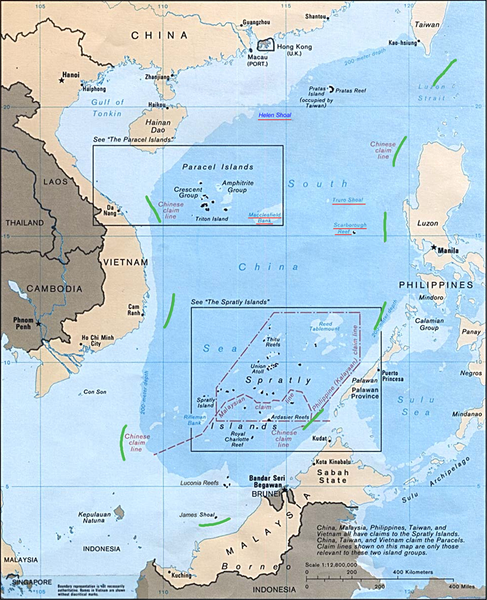
This is why China is building aircraft carrier battle groups and why the US is countering China through a massive buildup focused on Guam. For the US, this naval and air power buildup is parallel to the Diego Garcia base that is supposed to control Africa, and the Middle East, and Central Asia. These are the two oceans over which the US wants superiority in order to at least keep sea lanes open, while leaving the opportunity for air strikes in land areas.
3. The US economy is not hostage to China's every whim. There is a false idea that China holds so much US Treasury debt that it can arbitrarily decide to sink the US economy. For one thing, it would suffer even more from losing the US export market than the US would from having to print a bit more money. For another thing, it doesn't hold all that much US public debt. Here are a couple charts on that:


So, although extreme nationalism (and hatred of Japan due to past war crimes and imperialism) may push China to war, it has both foreign relations and economic incentives to not go to war with any of its neighbors in the near future.

No comments:
Post a Comment