Saturday, December 14, 2013

Nelson Mandela and Violence

If there's anything reactionaries love to do, it's eulogizing the "nonviolence" of leaders who led liberation struggles. One of the most common criticisms of Nelson Mandela, the ANC, and the anti-Apartheid struggle was their openness to violent tactics. From a 1990 New York Times opinion piece, here is one such instance of this inane criticism:


Understandably, Americans are eager to hear Mr. Mandela's opinions delivered in person, after his release from 27 years of imprisonment. But he, in turn, needs to answer one simple question: Why won't he and the A.N.C. renounce violence?
While armed resistance is justified in certain circumstances, growing violence throughout South Africa now threatens the process of peaceful reform. Clearly, Mr. Mandela's stature should now be used to preach a message of nonviolence and civil disobedience.
(If really want to know what I'm talking about, go to National Review and read the comments on an article about Mandela, if you haven't eaten lately.)

Now, I am not generally in favor of violence. As I see it, at least 95% percent of violence (such as wars between states, in general) is both evil and pointless, something in which no decent person should participate. But what in particular makes a struggle like the anti-Apartheid struggle the object of this criticism? Surely it isn't the innocence or pacifism of the South African government during that era (that government wasn't content to brutalize its own citizens, but engaged in several neo-colonial wars throughout Southern Africa).

So why does Nelson Mandela of all people turn almost everyone into a pacifist? There are people who didn't blink during the shock-and-awe bombing of Baghdad, who would love to "bomb, bomb, bomb, Iran," who are utter moral purists in the case of the anti-Apartheid struggle. Similarly, opinions about the Haitian Revolution or the French Revolution go one way, while (in the US, at least) the American Revolution and the Mexican-American war are generally seen as heroic endeavors, even if we wouldn't do it that way now.

For one thing, there is a strong ideology that supports violence by the state (preferably by one's own state), while abhorring violence by non-state actors as chaotic and terroristic. There is likely also a deeply ingrained racist tendency to view violence by black people as inherently morally suspect (so one hears a great deal about "atrocities" committed by the Haitian revolutionaries, but little about the conditions under which Haitian slaves had lived). And one hears little from critics of Mandela or the ANC about what exactly Apartheid was or who supported it and why.

In any case, if you're wondering why Mandela turned to a such a conciliatory position after the ANC came to power, think about who had the guns at the time. Not black South Africans. The fact that white supremacists often have no qualms about using violence, either legally or nonlegally, has been a defining factor in South African life since the creation of Apartheid in the 1940s.

Saturday, December 7, 2013

US Conservatives and Apartheid in South Africa

I'm not going to write my own account of this, but mainly link to others who have written some pretty thorough summaries of a shocking history. In sum, a who's who list of prominent 1980s conservatives were horribly, horribly wrong about Apartheid and those who opposed it. When we say "white supremacy," we often think of skinheads and neo-Nazis with tattoos. These conservatives supported the kind of society that such white supremacists dream of creating. I don't have any personal anger against these people, but I do think it's important to remember what they said and did in public.

At Foreign Policy, Sam Kleiner names a lot of names and shows just how wide and deep US conservative ambivalence about opposing Apartheid ran.

At The Atlantic, Ta-Nehisi Coates recounts the support for the Apartheid regime by core elements of intellectual conservatism.

At The New Republic, Jordan Michael Smith focuses on the personal attacks of many US conservatives against Nelson Mandela in particular.

One thing to notice in these accounts is the ways in which words like "terrorist" and "communist" are used as if they denote inherently evil and unchanging entities. Such descriptions blind those using them and their audiences, since they don't address concrete realities that shape the nature of political struggles. (That being said, I don't think that "conservatism" itself is responsible for supporting Apartheid, but it is pretty disturbing that such influential people who have described themselves as conservatives did so little to oppose such an unjustifiable social system.)

Update: And then there are the British conservatives.

Wednesday, December 4, 2013

3 Things to Know About the East China Sea Crisis

This November 23rd, China asserted that its air defense zone covered disputed islands in the East China Sea (which China calls the Diaoyu Islands and Japan calls the Senkaku Islands--South Korea has its own claims in the same area).With US, Japanese, and South Korea planes flying in the area, the situation is dangerous to say the least. For US residents worried about a possible conflict in the area, here are three key facts that provide context for this crisis:

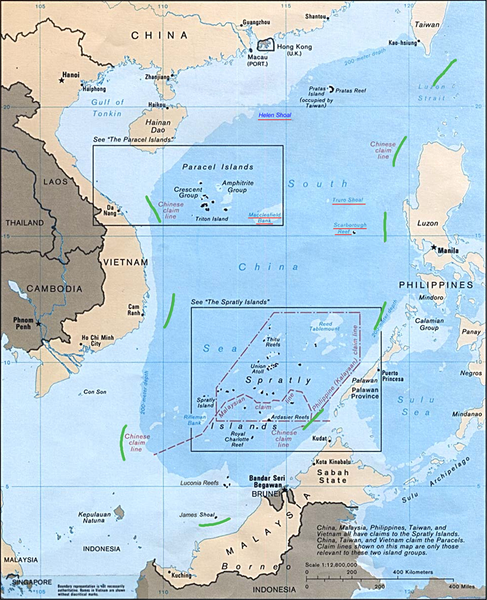
1. As international relations scholars have pointed outChina has border disputes and poor relations on almost every one of its land and sea borders. With the strange exceptions of Pakistan, Myanmar, and North Korea, China has poor relations with every one of its neighbors (and those three are not the ones that China would like to have on its side in an international dispute anyhow). To cite just a few examples, China fought a border war with India in 1962 (China won); China fought a massive border war with Vietnam in 1979, which was tied to Vietnam's invasion of Cambodia and its siding with the Soviet Union in the Sino-Soviet split; and China has ongoing disputes over islands and maritime economic zones in the South China Sea with Vietnam, Malaysia, Brunei, and the Philippines (part of the reason for the ruckus about China not sending enough to the Philippines following the recent typhoon).

2. China's claims to a large maritime area have their roots in China's maritime imperial history, which included receiving tribute from peoples in coastal and island areas for centuries. Today, this takes the shape of a "nine-dotted line" in the South China Sea, as well as East China Sea claims.


This is why China is building aircraft carrier battle groups and why the US is countering China through a massive buildup focused on Guam. For the US, this naval and air power buildup is parallel to the Diego Garcia base that is supposed to control Africa, and the Middle East, and Central Asia. These are the two oceans over which the US wants superiority in order to at least keep sea lanes open, while leaving the opportunity for air strikes in land areas.

3. The US economy is not hostage to China's every whim. There is a false idea that China holds so much US Treasury debt that it can arbitrarily decide to sink the US economy. For one thing, it would suffer even more from losing the US export market than the US would from having to print a bit more money. For another thing, it doesn't hold all that much US public debt. Here are a couple charts on that:


So, although extreme nationalism (and hatred of Japan due to past war crimes and imperialism) may push China to war, it has both foreign relations and economic incentives to not go to war with any of its neighbors in the near future.

Thursday, November 28, 2013

$15 an Hour in SeaTac

There is still a recount, but it appears that a referendum to create a local minimum wage of $15/hour in SeaTac, Washington has succeeded. On one side, the usual business interests are engaging in doomsaying. On the other side, labor groups such as the SEIU (which has also backed fast food worker demands for $15/hour) have waged a strong fight.

In most municipalities, this sort of law is risky, as businesses may make good on their threats to leave. SeaTac has the advantage of infrastructure, being the home of Seattle-Tacoma International Airport, which is not easy to move. Socialism in one city might just work there. SeaTac also has a high minority population, which may be a harbinger of future ethnic minority-labor union coalitions to raise wages in the US.

In any case, the mere fact that people are discussing and acting on this sort of measure is itself a shocking sign of progress in US political discourse. Some recent articles have noted that young Americans are less likely to reject Marxist analysis than are those who were shaped by Cold War propaganda and anxieties. It seems that immigrants from places that have seen actual Marxist movements and policies are also unlikely to share the sharply libertarian approach to economic issues that has had a stranglehold on US culture since the US was founded (i.e., the myth of the self-made "man").

Monday, November 25, 2013

Progress in Massachusetts?

I'm usually pessimistic about the possibility of a more humane and just society, but there have been two hopeful developments in Massachusetts. They might not go anywhere, but these possibilities usually aren't even on the table.

1. Legislators are considering raising the Commonwealth's minimum wage from $8 to $11 by 2015. Given the high cost of living Massachusetts, such an increase would just about keep pace with the national minimum wage in lost cost areas like Alabama. Of course the usual business interests are protesting the proposal, but their threats are pretty empty, since retailers and other low-end service employers are far more likely to slightly raise prices than to close up their businesses in protest against an extra $3 per hour (by 2015, following a gradual increase). Such employers can't move their Wal-Marts and Market Baskets to Mississippi or Alabama any more than they could have moved them to Bangladesh or Laos. Ultimately, the main pressure will be for higher wages, not fewer jobs. This is one small piece of regaining the share of GDP that capital has taken from labor over the last 30 or so years in the U.S.

2. Gubernatorial candidate Don Berwick has announced a health care platform that includes a single-payer health insurance plan. In the wake of the Healthcare.gov failures, a plan to drastically simplify health insurance makes sense. More importantly, as Berwick points out, for governments and employers alike, health care costs in the U.S., including Massachusetts, are rising so quickly that they are a serious danger to economic vitality. An employer-based health insurance system, with some government programs for the poor, disabled, and elderly, is incredibly inefficient and fails to cut out the obvious and unnecessary middle-men: insurers.

Saturday, November 23, 2013

How the Republican Party Will End Soon

I don't like making predictions like this, because such predictions are almost always wrong. So here goes: The Republican Party as it now exists will end within a decade because of the gay marriage issue. No, not the fiscal issues and tactics debated with reference to the Tea Party. And not the so-called isolationism of Rand Paul and his libertarian-leaning supporters or immigration reform proposals. Those splits might be costly to Republicans, but both sides in each of those disputes can live with each other.

So what's that "as it now exists" qualifier? By that I mean, as a national party that can win and hold power in either elected branch of government. As a result of disagreement regarding gay marriage, there is almost certain to be a major split that will doom the party in elections for the foreseeable future.

This week there is a story about a public dispute between Dick Cheney's two daughters on the issue. I happen to think that Liz Cheney is only (probably unsuccessfully) pandering to Wyoming voters, but this conflict nicely illustrates a larger one among Republicans. On the one hand, a growing majority of, not only U.S. voters, but soon of Republicans as well, has no problem with homosexuality or its legal implications. Within the party elite, even anti-tax zealot Grover Norquist has joined the GOProud faction, while Wall Street Journal types are at least muted on the issue.

But hardcore social conservatives (the Religious Right, as they were once known), will not change. Giving in on gay marriage would violate the most central beliefs of Christian conservatives in particular, so it's not going to happen. For most Evangelicals, the inerrant and infallible words of the Bible are read as calling any and all homosexual actions sinful with no exceptions. For most conservative Catholics, the longstanding moral teaching of the Catholic Church adds weight to the same biblical passages. In both cases, gay marriage runs counter to the highest moral authority recognized by these groups, who probably make up at least half of the Republican Party's voter base.

As Republican elites are increasingly favorable to gay marriage and Republican politicians change their positions to appeal to a drastically-changed electorate, the social conservative element of the Republican base will have hard choices to make. In all likelihood, the likes of Mike Huckabee, Rick Santorum, and Newt Gingrich will either start a new "true conservative" party or they will engage in unrestrained political warfare against Republican elites and politicians from within the party. There doesn't seem to be any way around that conclusion. As much as social conservatives are usually also fiscal conservatives, their root motivation is to "serve God rather than man."

To me, this will be a welcome development, as I oppose both the close association of Christianity with the nation-state and the two-party system. For the Democratic Party, it will probably be an incredible windfall, especially if (as is widely predicted) they become competitive in Texas. But for Republicans the soul-searching of 2008 and 2012 will only intensify over the next decade or two.

Thursday, November 21, 2013

It's a Noonan Day in America!, Part III

This time the Pegster addresses time and space from a highly scientific vantage point:

"Years ago John McPhee wrote a great book about Bill Bradley called 'A Sense of Where You Are.' I keep thinking about that title." Then some stuff about time and space, finding yourself so you can locate (italics in original) yourself, &c. Occasional jump shot, maybe?


"Politically where are we right now, at this moment?" As opposed to right now, at another moment.


Apparently Obamacare "dealt with something personal, even intimate: your health, the care of your body, the medicines you choose to take or procedures you get." But mostly your health insurance, which takes the form of paperwork, and also a lot of Hispanics taking up spots at the doctor's office, which is an invasive procedure, probably, as well as icky, I guess.


"The problem now is not the delivery system of the program, it’s the program itself. Not the computer screen but what’s inside the program. This is something you can’t get the IT guy in to fix." But maybe the Geek Squad guy from Best Buy can figure it out?


"Back to a sense of where we are. You know where we are? It’s as if it’s 1964 and the administration has just passed landmark civil rights legislation and the bill goes into effect, and everyone looks—only immediately it is apparent that it makes everyone’s life worse!"


George Wallace and Strom Thurmond are scratching their heads, Peg.


"It’s the biggest governmental enterprise that hasn't worked since the earliest beginnings of the U.S. rocket program, when they kept trying to send rockets into space and they kept falling, defeated and groaning, into the ground."


OK, the rockets were groaning? Anthropomorphize much? Also, I thought the biggest U.S. government failures were the Vietnam War, the Iraq War, the Afghanistan War...


"ObamaCare is a practical, policy and political disaster, a parlay of poisonous P’s.It's also a panoply of pernicious P's: A pugnacious, punctilious, and prudential disaster.


"Second point: I don’t know, maybe the Republican Party could focus on where we are and help those Americans who are beside themselves with anxiety?" Location, location, location, just like Bill Bradley knew when he won his political victories and what-not.