Saturday, December 14, 2013

Nelson Mandela and Violence

If there's anything reactionaries love to do, it's eulogizing the "nonviolence" of leaders who led liberation struggles. One of the most common criticisms of Nelson Mandela, the ANC, and the anti-Apartheid struggle was their openness to violent tactics. From a 1990 New York Times opinion piece, here is one such instance of this inane criticism:


Understandably, Americans are eager to hear Mr. Mandela's opinions delivered in person, after his release from 27 years of imprisonment. But he, in turn, needs to answer one simple question: Why won't he and the A.N.C. renounce violence?
While armed resistance is justified in certain circumstances, growing violence throughout South Africa now threatens the process of peaceful reform. Clearly, Mr. Mandela's stature should now be used to preach a message of nonviolence and civil disobedience.
(If really want to know what I'm talking about, go to National Review and read the comments on an article about Mandela, if you haven't eaten lately.)

Now, I am not generally in favor of violence. As I see it, at least 95% percent of violence (such as wars between states, in general) is both evil and pointless, something in which no decent person should participate. But what in particular makes a struggle like the anti-Apartheid struggle the object of this criticism? Surely it isn't the innocence or pacifism of the South African government during that era (that government wasn't content to brutalize its own citizens, but engaged in several neo-colonial wars throughout Southern Africa).

So why does Nelson Mandela of all people turn almost everyone into a pacifist? There are people who didn't blink during the shock-and-awe bombing of Baghdad, who would love to "bomb, bomb, bomb, Iran," who are utter moral purists in the case of the anti-Apartheid struggle. Similarly, opinions about the Haitian Revolution or the French Revolution go one way, while (in the US, at least) the American Revolution and the Mexican-American war are generally seen as heroic endeavors, even if we wouldn't do it that way now.

For one thing, there is a strong ideology that supports violence by the state (preferably by one's own state), while abhorring violence by non-state actors as chaotic and terroristic. There is likely also a deeply ingrained racist tendency to view violence by black people as inherently morally suspect (so one hears a great deal about "atrocities" committed by the Haitian revolutionaries, but little about the conditions under which Haitian slaves had lived). And one hears little from critics of Mandela or the ANC about what exactly Apartheid was or who supported it and why.

In any case, if you're wondering why Mandela turned to a such a conciliatory position after the ANC came to power, think about who had the guns at the time. Not black South Africans. The fact that white supremacists often have no qualms about using violence, either legally or nonlegally, has been a defining factor in South African life since the creation of Apartheid in the 1940s.

Saturday, December 7, 2013

US Conservatives and Apartheid in South Africa

I'm not going to write my own account of this, but mainly link to others who have written some pretty thorough summaries of a shocking history. In sum, a who's who list of prominent 1980s conservatives were horribly, horribly wrong about Apartheid and those who opposed it. When we say "white supremacy," we often think of skinheads and neo-Nazis with tattoos. These conservatives supported the kind of society that such white supremacists dream of creating. I don't have any personal anger against these people, but I do think it's important to remember what they said and did in public.

At Foreign Policy, Sam Kleiner names a lot of names and shows just how wide and deep US conservative ambivalence about opposing Apartheid ran.

At The Atlantic, Ta-Nehisi Coates recounts the support for the Apartheid regime by core elements of intellectual conservatism.

At The New Republic, Jordan Michael Smith focuses on the personal attacks of many US conservatives against Nelson Mandela in particular.

One thing to notice in these accounts is the ways in which words like "terrorist" and "communist" are used as if they denote inherently evil and unchanging entities. Such descriptions blind those using them and their audiences, since they don't address concrete realities that shape the nature of political struggles. (That being said, I don't think that "conservatism" itself is responsible for supporting Apartheid, but it is pretty disturbing that such influential people who have described themselves as conservatives did so little to oppose such an unjustifiable social system.)

Update: And then there are the British conservatives.

Wednesday, December 4, 2013

3 Things to Know About the East China Sea Crisis

This November 23rd, China asserted that its air defense zone covered disputed islands in the East China Sea (which China calls the Diaoyu Islands and Japan calls the Senkaku Islands--South Korea has its own claims in the same area).With US, Japanese, and South Korea planes flying in the area, the situation is dangerous to say the least. For US residents worried about a possible conflict in the area, here are three key facts that provide context for this crisis:

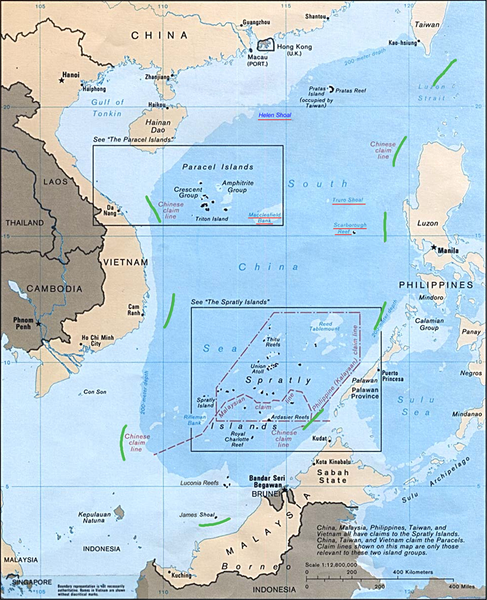
1. As international relations scholars have pointed outChina has border disputes and poor relations on almost every one of its land and sea borders. With the strange exceptions of Pakistan, Myanmar, and North Korea, China has poor relations with every one of its neighbors (and those three are not the ones that China would like to have on its side in an international dispute anyhow). To cite just a few examples, China fought a border war with India in 1962 (China won); China fought a massive border war with Vietnam in 1979, which was tied to Vietnam's invasion of Cambodia and its siding with the Soviet Union in the Sino-Soviet split; and China has ongoing disputes over islands and maritime economic zones in the South China Sea with Vietnam, Malaysia, Brunei, and the Philippines (part of the reason for the ruckus about China not sending enough to the Philippines following the recent typhoon).

2. China's claims to a large maritime area have their roots in China's maritime imperial history, which included receiving tribute from peoples in coastal and island areas for centuries. Today, this takes the shape of a "nine-dotted line" in the South China Sea, as well as East China Sea claims.


This is why China is building aircraft carrier battle groups and why the US is countering China through a massive buildup focused on Guam. For the US, this naval and air power buildup is parallel to the Diego Garcia base that is supposed to control Africa, and the Middle East, and Central Asia. These are the two oceans over which the US wants superiority in order to at least keep sea lanes open, while leaving the opportunity for air strikes in land areas.

3. The US economy is not hostage to China's every whim. There is a false idea that China holds so much US Treasury debt that it can arbitrarily decide to sink the US economy. For one thing, it would suffer even more from losing the US export market than the US would from having to print a bit more money. For another thing, it doesn't hold all that much US public debt. Here are a couple charts on that:


So, although extreme nationalism (and hatred of Japan due to past war crimes and imperialism) may push China to war, it has both foreign relations and economic incentives to not go to war with any of its neighbors in the near future.

Thursday, November 28, 2013

$15 an Hour in SeaTac

There is still a recount, but it appears that a referendum to create a local minimum wage of $15/hour in SeaTac, Washington has succeeded. On one side, the usual business interests are engaging in doomsaying. On the other side, labor groups such as the SEIU (which has also backed fast food worker demands for $15/hour) have waged a strong fight.

In most municipalities, this sort of law is risky, as businesses may make good on their threats to leave. SeaTac has the advantage of infrastructure, being the home of Seattle-Tacoma International Airport, which is not easy to move. Socialism in one city might just work there. SeaTac also has a high minority population, which may be a harbinger of future ethnic minority-labor union coalitions to raise wages in the US.

In any case, the mere fact that people are discussing and acting on this sort of measure is itself a shocking sign of progress in US political discourse. Some recent articles have noted that young Americans are less likely to reject Marxist analysis than are those who were shaped by Cold War propaganda and anxieties. It seems that immigrants from places that have seen actual Marxist movements and policies are also unlikely to share the sharply libertarian approach to economic issues that has had a stranglehold on US culture since the US was founded (i.e., the myth of the self-made "man").

Monday, November 25, 2013

Progress in Massachusetts?

I'm usually pessimistic about the possibility of a more humane and just society, but there have been two hopeful developments in Massachusetts. They might not go anywhere, but these possibilities usually aren't even on the table.

1. Legislators are considering raising the Commonwealth's minimum wage from $8 to $11 by 2015. Given the high cost of living Massachusetts, such an increase would just about keep pace with the national minimum wage in lost cost areas like Alabama. Of course the usual business interests are protesting the proposal, but their threats are pretty empty, since retailers and other low-end service employers are far more likely to slightly raise prices than to close up their businesses in protest against an extra $3 per hour (by 2015, following a gradual increase). Such employers can't move their Wal-Marts and Market Baskets to Mississippi or Alabama any more than they could have moved them to Bangladesh or Laos. Ultimately, the main pressure will be for higher wages, not fewer jobs. This is one small piece of regaining the share of GDP that capital has taken from labor over the last 30 or so years in the U.S.

2. Gubernatorial candidate Don Berwick has announced a health care platform that includes a single-payer health insurance plan. In the wake of the Healthcare.gov failures, a plan to drastically simplify health insurance makes sense. More importantly, as Berwick points out, for governments and employers alike, health care costs in the U.S., including Massachusetts, are rising so quickly that they are a serious danger to economic vitality. An employer-based health insurance system, with some government programs for the poor, disabled, and elderly, is incredibly inefficient and fails to cut out the obvious and unnecessary middle-men: insurers.

Saturday, November 23, 2013

How the Republican Party Will End Soon

I don't like making predictions like this, because such predictions are almost always wrong. So here goes: The Republican Party as it now exists will end within a decade because of the gay marriage issue. No, not the fiscal issues and tactics debated with reference to the Tea Party. And not the so-called isolationism of Rand Paul and his libertarian-leaning supporters or immigration reform proposals. Those splits might be costly to Republicans, but both sides in each of those disputes can live with each other.

So what's that "as it now exists" qualifier? By that I mean, as a national party that can win and hold power in either elected branch of government. As a result of disagreement regarding gay marriage, there is almost certain to be a major split that will doom the party in elections for the foreseeable future.

This week there is a story about a public dispute between Dick Cheney's two daughters on the issue. I happen to think that Liz Cheney is only (probably unsuccessfully) pandering to Wyoming voters, but this conflict nicely illustrates a larger one among Republicans. On the one hand, a growing majority of, not only U.S. voters, but soon of Republicans as well, has no problem with homosexuality or its legal implications. Within the party elite, even anti-tax zealot Grover Norquist has joined the GOProud faction, while Wall Street Journal types are at least muted on the issue.

But hardcore social conservatives (the Religious Right, as they were once known), will not change. Giving in on gay marriage would violate the most central beliefs of Christian conservatives in particular, so it's not going to happen. For most Evangelicals, the inerrant and infallible words of the Bible are read as calling any and all homosexual actions sinful with no exceptions. For most conservative Catholics, the longstanding moral teaching of the Catholic Church adds weight to the same biblical passages. In both cases, gay marriage runs counter to the highest moral authority recognized by these groups, who probably make up at least half of the Republican Party's voter base.

As Republican elites are increasingly favorable to gay marriage and Republican politicians change their positions to appeal to a drastically-changed electorate, the social conservative element of the Republican base will have hard choices to make. In all likelihood, the likes of Mike Huckabee, Rick Santorum, and Newt Gingrich will either start a new "true conservative" party or they will engage in unrestrained political warfare against Republican elites and politicians from within the party. There doesn't seem to be any way around that conclusion. As much as social conservatives are usually also fiscal conservatives, their root motivation is to "serve God rather than man."

To me, this will be a welcome development, as I oppose both the close association of Christianity with the nation-state and the two-party system. For the Democratic Party, it will probably be an incredible windfall, especially if (as is widely predicted) they become competitive in Texas. But for Republicans the soul-searching of 2008 and 2012 will only intensify over the next decade or two.

Thursday, November 21, 2013

It's a Noonan Day in America!, Part III

This time the Pegster addresses time and space from a highly scientific vantage point:

"Years ago John McPhee wrote a great book about Bill Bradley called 'A Sense of Where You Are.' I keep thinking about that title." Then some stuff about time and space, finding yourself so you can locate (italics in original) yourself, &c. Occasional jump shot, maybe?


"Politically where are we right now, at this moment?" As opposed to right now, at another moment.


Apparently Obamacare "dealt with something personal, even intimate: your health, the care of your body, the medicines you choose to take or procedures you get." But mostly your health insurance, which takes the form of paperwork, and also a lot of Hispanics taking up spots at the doctor's office, which is an invasive procedure, probably, as well as icky, I guess.


"The problem now is not the delivery system of the program, it’s the program itself. Not the computer screen but what’s inside the program. This is something you can’t get the IT guy in to fix." But maybe the Geek Squad guy from Best Buy can figure it out?


"Back to a sense of where we are. You know where we are? It’s as if it’s 1964 and the administration has just passed landmark civil rights legislation and the bill goes into effect, and everyone looks—only immediately it is apparent that it makes everyone’s life worse!"


George Wallace and Strom Thurmond are scratching their heads, Peg.


"It’s the biggest governmental enterprise that hasn't worked since the earliest beginnings of the U.S. rocket program, when they kept trying to send rockets into space and they kept falling, defeated and groaning, into the ground."


OK, the rockets were groaning? Anthropomorphize much? Also, I thought the biggest U.S. government failures were the Vietnam War, the Iraq War, the Afghanistan War...


"ObamaCare is a practical, policy and political disaster, a parlay of poisonous P’s.It's also a panoply of pernicious P's: A pugnacious, punctilious, and prudential disaster.


"Second point: I don’t know, maybe the Republican Party could focus on where we are and help those Americans who are beside themselves with anxiety?" Location, location, location, just like Bill Bradley knew when he won his political victories and what-not.

Monday, November 18, 2013

Socialism in One City

It's not earth-shattering, but Socialist Alternative candidate Kshama Sawant seems to have won a Seattle city council seat. Among other things, it will be interesting to see how her opposition to tax breaks and advocacy for the working class can actually affect things. There doesn't seem to be much room for such an approach as long as neighboring municipalities can adopt more business-friendly policies. Much the same problem confronts Bill de Blasio in New York City.

This is an old problem that the Soviet Union faced. Whereas Stalin wanted to build "socialism in one country," Trotsky was convinced that only a worldwide revolution would succeed in replacing capitalism. Then again, you have to start somewhere. Ultimately, I think that alternatives that can be economically competitive within a capitalist context, such as worker-owned cooperatives, along with some public enterprises, will be needed to replace capitalist social and economic structures.

In the meantime, electoral alternatives to capitalist political parties are needed, if only so that the will of the people, so feared by right-libertarians like Peter Thiel, has an outlet. This is necessary to keep the working class politically-engaged. (Guess what: The Democratic Party is not doing that.) On that level, Kshama Sawant and Bill de Blasio are Peter Thiel's worst nightmare: a real electoral alternative, however powerless they are to effect immediate change.

Sunday, November 17, 2013

Dowd-Time

Maureen Dowd has been talking to friends of "Uncle Joe" Biden. They are unhappy, because Hillary, and also Obama, but why should we care, oh TV show: "There is a futuristic cop show starting soon on Fox called 'Almost Human,' produced by J.J. Abrams."

So there's a black robot and a bumbling white guy in 2048... OK, who are we kidding, this is about Barack Obama and Joe Biden, obvi: "Fox is billing the show as the first Robromance. But, of course, it’s not the first. We have one in the West Wing." "Robromance." How apt a description.

"In a capital known for hogging credit and stealing turf, Joe Biden has provided his boss with a rare loyalty over the last five years." So that's where my lawn went.

"His friends stress that Biden is not a golden retriever, but a sled dog, pulling his weight, chipping in, doing whatever he can." It's a low place to be, when your friends only think to compare you to different kinds of dogs. Also, this reminds me of Todd Palin (never trust a guy named Todd, btw).


"Biden loyalists believe Daley added insult to injury by dishing..." zzzzzz

Friday, November 15, 2013

It's a Noonan Day in America!, Part II

It's all about message control in Noon-town, and what a message it is.

"Republicans should stop taking the boob bait of the press."

Moving right along... It seems that the press isn't doing it's job, namely criticizing the Affordable Care Act. For some reason Democrats aren't doing that either.

"Democrats aren’t talking about that, at least on the record, and none of them colorfully."

Worse yet, they aren't "colorfully" disparaging themselves, almost as if they know what they're doing. "They’re in the domestic political/policy debacle of their lives and their reaction is discretion." Which is a vice at the moment, it seems.

"More than four years ago, in July 2009, I wrote a column in which Franklin Delano Roosevelt offered President Obama some wisdom on health care." Clearly, history will remember July 2009 as the month when FDR appeared to Barack Obama, droppin' some serious wisdom.

"But FDR had an idea—a sly one, as his ideas usually were." FDR, who obviously is doing all this in the real world and not just in Peggy Noonan's head. "I still believe FDR was more or less right." OK, maybe this is the FDR of Noonan's feverish dream, but still, he has wisdom and what-not, so he's almost as good as the real thing.

Blah, blah, if only Obama had just worked with Republicans things would be great, Paul Ryan had a great health care plan that didn't just involve personal savings accounts in which poor people could stockpile all their accumulating wealth from capital gains.

Tuesday, November 12, 2013

It's a Noonan Day in America!

Today, the Pegster has some deep thoughts about the deep state:

"President Obama says he didn’t know the U.S. government was tapping Angela Merkel, and you know, maybe he didn’t."

I think she means Angela Merkel's phone. Anyhow.

"Maybe they’re bugging so many people it’s hardly news to them when they bug the chancellor of Germany. Maybe they mentioned it to the president, maybe not. Maybe they don’t know." Maybe they're bugging Joe Biden by repeatedly rick-rolling him. Maybe they're watching too much Bugs Bunny. Maybe they're starting an insect collection. It's hard to say. It could go either way.

"Maybe they will choose to be courteous to the president, stop the tap and present Germany with evidence the tap has stopped."

Trust, but verify--except during Oktoberfest.

"But maybe the deep state will think it doesn’t have to be pushed around by some joker who’ll be gone in a few years, to be replaced by another joker."

Why so serious?

Then P-noon goes on for a few paragraphs verbatim quoting Bob Woodward on the JFK assassination, from when she was on "Face the Nation" the other day. Anyhow back to parties in Northern Virginia:

"It is more bureaucratic than that, more banal, less colorful, less dramatic. It is more James Clapper than James Angleton, more Vienna, Va., than mildly sinister McLean dinner party."

It's more inside baseball than that alley behind Wrigley Field, more Alain Badiou, than Gilles Deleuze.

"But it is actually the big thing our country should be talking about now, needs to be talking about and would be talking about if only our president had not decided, a few years ago, to blow up the U.S. health-care system."

Too bad the Joker blew up the U.S. health-care system. I mean that as a metaphor for detonating a bomb, which corresponds closely to the CBO's assessment of the Patient Protection and Affordable Care Act, in this metaphor, kind of like how Dodd-Frank was a Hiroshima, metaphorically-speaking, but not literally the same thing. Anyhow, too bad we can't do much talking right now, or even writing op-ed pieces about whatever comes to mind.

"Bonus anecdote." About "a famous European leader," who "looked crestfallen" after learning that someone is always spying on him.

"Later, to an aide, he said, 'I guess the only way to guarantee my privacy now is to sit crouched in the bathtub, with a big blanket over my head, talking to myself.'"

This guy sounds a bit more Charlie Brown than Jacques Chirac, more Bed-Stuy hipster party, than Upper West Side gala.

Saturday, November 2, 2013

Tom Friedman Is the Walrus, Part III

There's nothing like a United Nations appearance by a world leader to provide some Friedalicious metaphors. Even Tom agrees: "For anyone who enjoys a good metaphor, Iranian President Hassan Rouhani’s visit to the United Nations has been a field day for sheep and wolves." Why they couldn't schedule their field days separately, I'm not sure, but it is nice that they get to go to the U.N. Headquarters instead of sitting in class all day long, even if it's a Crips and Bloods situation in the end.

Let's get to the point: "there’s only one relevant question: Is Iran content to be a big North Korea or does it aspire to be a Persian China?" I'm not up on my cat breeds, but I think those have some golden, fluffy hair or something? 

Then we discover that North Korea keeps its people "on a permanent low-calorie diet of both food and information." Just wait till they figure out the information carbs thing! They'll go on a Todd Akin diet or something.

And apparently Iran's Revolutionary Guards "never want to see an American embassy in Tehran." Hm, that rings a bell for some reason. Maybe I should google "American embassy in Tehran" and see if anything pops up. Eh, probably nothing important.

Also, "China’s leaders are not Boy Scouts either." So there goes my mental image of Hu Jintao and Jiang Zemin in Boy Scout uniforms. "Yet we’ve found a stable, mutually beneficial relationship with Beijing as 'frenemies.'" I guess I'm not as current on my International Relations terminology as I should be. So the U.S.-China relationship can be classified as "frenemies with mutual benefits."

But, more importantly, Iran still has to "decide if it really is a China in Persian clothing — or something like that." I think he even confused himself there.

Thursday, October 31, 2013

Tom Friedman Is the Walrus, Part II

Teach for America has a series of global offshoots known as Teach for All, the Friedster breathlessly reports ("I never thought I’d have to come to China for a breath of fresh air." Get it, urban air pollution? Get it?) from "the China-Myanmar border area."

He "could not help but remark to Wendy Kopp, the founder of Teach for America and C.E.O. of Teach for All, that Teach for All is 'the anti-Al Qaeda.'" You see, "since 9/11, I’ve spent so much time writing about people who are breaking things and so little time covering people who are making things."

The day that changed everything, indeed. I'm sure the Teach for Peru participants he mentions have a similar take on things, just opposing Al Qaeda in Peru at every turn, trying to perpetrate the anti-9/11.

"Which is why, concludes Kopp, investing in smart schools and kids pays so many more dividends than smart bombs."

It's pretty easy to get confused, what with the word 'smart' being in both, but stocks that pay dividends tend to grow in value, making them superior to other investment options, such as Al Qaeda, as well as air pollution in China.

Sunday, October 27, 2013

Anti-Americanism and NSA Spying

"Anti-Americanism" is a label designed to conceal the issues at stake.

(Photo: CLAUDIA HIMMELREICH — McClatchy)
Last week, Germans, including Chancellor Angela Merkel, were enraged by the revelation that the U.S. National Security Agency (NSA) had eavesdropped on Merkel's cell phone conversations. Russell Berman claims that this discovery has been used to foment anti-American sentiment among Germans: "A hostile press has portrayed America as a demonic surveillance state that combines unlimited spying with targeted killings."

But one wonders how much portraying Germany's "hostile press" really has to do. As Max Paul Friedman has argued in his book Rethinking Anti-Americanism: The History of an Exceptional Concept in American Foreign Relations"anti-Americanism" is a myth designed to make disagreement with U.S. government actions and policies seem like a psychological disorder instead of rational dissent from certain specific actions. 

And Berman also confuses the issue by blaming Obama's purported "foreign policy of weakness" for "anti-Americanism." Weakness and strength are beside the point. Notice that anti-Japanese sentiment has grown after Japan has become weaker, while anti-Chinese sentiment has grown while China grows stronger. Rather, it is how a nation is weak or strong and how it treats those outside its borders that determines world opinion toward it. So an economically and politically weak Cuba retains a great deal of influence, while North Korea's massive military strength has brought it virtually no prestige or friendship.

Thursday, October 24, 2013

Tom Friedman is the Walrus


From here:

“Seriously, you’d get a much better feel for Washington politics today by reading ‘Lawrence of Arabia’ than the Federalist Papers.”

Like the time he filibustered to try to shut down the Ottoman system of governance before raiding a village on camelback. (Had to say “Seriously” just to emphasize how similar these things are. Exactly the same, pretty much, except the sandstorms.)

“Let me start by recalling a column I recently wrote from Kansas that noted the parallel between monocultures and polycultures in nature and politics.”

Recycling is good, I guess.

[Then he blabs on for about five paragraphs about horticulture in Kansas {where he was, btw, in person, even though people usually don’t go there, except maybe Kansans, and he has also been to the Middle East to see lotuses and Lexuses, on multiple occasions more than once and met real Arab Muslim people}.]

“It’s striking how much the Tea Party wing of the G.O.P. has adopted the tactics of the P.O.G. – ‘Party of God’ – better known as Hezbollah.”

For instance, playing pogs around the campfire after a good jihad. Also, the higher education wing of the U.K. has adopted the strategy of K.U. – better known as Kuwait University. Let that sink in and then consider the implications.

[Blah, blah, Tea Party is just like Hezbollah, blowing things up and getting blown up by Israel, except not exactly like Hezbollah because they’re not technically terrorists, but let’s throw in Ted Cruz’s name now so no one notices how dumb the analogy is. Two minute hate.]

I'm not sure if this one is worse than Maureen Dowd’s Ted Cruz fan-fic the other day.

These people are employed, as writers, right now.

Yes, the writing is atrocious. But what's really problematic is the way these liberal opinionistas brand any viewpoint outside their own narrow imagination as radical and terroristic. By accusing their opponents of being nihilistic or Islamist, they are using crude metaphors to do the work that should be done by actual arguments. 

These metaphors rely upon social signals, namely the notion that "those people" of the Tea Party have nothing in common with us wealthy, enlightened Manhattanites. Despite his conversations with CEOs on golf courses all around the world, Friedman has to get out more. Maybe next time he's in Kansas he can talk to more people than plants.

Saturday, October 19, 2013

Tea Party Justice

(Other) people (who I don't know) should be punished for their shortcomings (about which I know nothing).

In the wake of the 2013 U.S. government shutdown and a narrowly averted default on federal debt, many commentators have tried to explain the apparently irrational actions of politicians associated with the Tea Party movement. In light of the fruitlessness of these actions and the potentially catastrophic implications of a default, it does seem worthwhile to explain what motivates Tea Party rage, especially regarding the U.S. Patient Protection and Affordable Care Act. As someone who isn't particularly attached to that legislation, I still find it frightening just how disproportionate the anger toward it is.

Quite a few observers have claimed that the Tea Party is motivated by nihilism. The Big Lebowski aside, this isn't much of an explanation. Other than some fringe groups of Russians and Germans in the late 19th and early 20th centuries, nihilism hasn't typically actually inspired any significant collective action.

Another theory is that the fear of a black president has tapped into deep reservoirs of anti-black hatred in the U.S. There is something to that, since for roughly 450 of the 500 years since North America was settled by non-Natives there has been some form or another of open hostility toward people with any known African ancestry. Given the kind of unintelligible rage inspired by the relatively moderate policies and measured and calm personality of Obama (in comparison to the reprehensible personal life of Clinton and the flippant rhetoric of Dubya), there might be something to this. In particular, the Affordable Care Act, supposedly a socialist and un-American plot, is rooted in the ideas of conservative and Republican think-tanks and politicians. (Anyone ignorant enough to think of the ACA as socialist is welcome to sign up for the public option--oh yeah, there is none).

So what really motivates the Tea Party? They are largely motivated by the idea that bad and lazy people should be punished. This principle of retributive justice is fairly widely held in the U.S. But the Tea Party conveniently feeds off the idea that someone, somewhere out there is undeserving of healthcare, food, and housing, as Mitt Romney put it. Of course, no one can name 47% percent of the people they know as part of this category, but the factual issue is beside the point. More important is the moral aspect: There is a moral disagreement between the notion that people ought to suffer for (alleged) wrongdoing and the notion that people should not be allowed to suffer if that is at all possible. For the most part, the Tea Party buys into the notion of retributive justice: Doing right should be rewarded proportionately, while doing wrong should be punished proportionately.

Of course, one might think, isn't that just what morality is? There are some serious problems with this approach, though. For one thing, who could possibly sort out the deserving from the undeserving to know who should and who shouldn't be allowed to starve/go homeless/die without medical care? An obvious answer is that this can be privately worked out by churches, employers, family members, etc. As Corey Robin has pointed out, since 1789 or so conservative ideology has been more interested in preserving private hierarchies than in preserving public ones. In other words, relying on such entities as employers to determine who should be given food, healthcare, and housing amounts to reliance on a largely unaccountable private tyranny. There is the mythology of the best and hardest working rising to the top, but that ignores the countless times when that doesn't happen. More than that, though, it allows the other 90% to potentially fall through the cracks of society. (As for churches and charities, go ask them if they are both able and willing to pay for the rent, grocery bills, and health insurance of even 10 families in need. Didn't think so.)

Moreover, there is something horribly wrong with a moral outlook that allows for people starving, going involuntarily homeless, or lacking needed medical care simply on the basis of (again, alleged) moral failure. Even if we could identify those who deserve to be poor, that fate is one that no one deserves unless incredible scarcity exists. Such scarcity obviously does not exist. What remains is a decision about the (plausible) mechanism used to eliminate poverty in a society. But that assumes that one views poverty as an unmitigated evil. For many Tea Party members, it may be that poverty is a good thing insofar as it properly disciplines the workforce and forces people to accept their just deserts. Other people, that is. (Keep your government hands of my Medicare, etc.)

[Update: Paul Krugman says something similar.]

Saturday, October 12, 2013

Don't Put Children First

 Putting children before teachers undermines all of us, including children.

In recent years conversations about education in the United States have revolved around reform: Something is wrong with our schools, we are told. We've let the interests of teachers' unions rather than the needs of students dictate education policy. What we really need to do, the story goes, is put the needs of children first. This, in turn, translates into calls for increased reliance on standardized testing, school privatization, competition between schools, and a lessening of the power held by teachers' unions. For an overview of problems with this approach, see Diane Ravitch's recent writing. Among other things, Ravitch points out that U.S. test scores and graduation rates have actually risen over the past few decades, while differences in student performance correspond closely to parents' income levels.

Opponents of so-called school reform (such as Ravitch) typically argue that, at the end of the day, privatization and purported accountability measures are not what's really best for children. This may have some value as a public relations approach (especially when teachers feel that they have been publicly maligned), but it's an approach that cedes a lot of ground. Really, the rest of us have to stand with teachers, with whom we have shared interests.

One of the biggest falsehoods behind the notion of putting children first is the idea that education inherently leads to better economic outcomes, for both individuals and nations. So it is assumed that better education will almost automatically lead to both national economic prosperity and a path out of poverty for low-income students. On a national level, this is false in that economic prosperity typically paves the way for better educational outcomes (as in Massachusetts or Singapore), while other areas (such as Palestine) have excellent educational opportunities but nothing to show for it economically. Clearly, social and other structural factors have a lot more say in things than whether students have learned calculus, although basic literacy is a prerequisite for most economic development.

On an individual level, one can point to the plight of adjunct university and college faculty members in the U.S., who typically live in poverty and without steady workloads. These are a substantial portion of the most well-educated people in the world, but demand for their labor has fallen drastically for reasons outside their control. More broadly, we have to realize that not everyone in a society is going to be able to work in a high-wage field, not simply because of aptitudes, but also because there isn't sufficient demand for lawyers or engineers while there is a great deal of demand for home care workers (who weren't even covered by U.S. minimum wage laws until this year) and cashiers. Higher levels of education will substantially aid employers, but not labor, who will face increased job market competition and still-stagnant or falling wages, unless wages for all fields rise. To assume that one's survival will depend on a combination of educational attainment and unusual job market success is to consign most people in a society to poverty. That is the future under an approach that assumes that better education will necessarily lead to more wealth for individuals.

But what does this have to do with teachers? Things are getting bad for the U.S. middle class. Among other things, teachers in Chicago are being laid off and replaced by low-wage college graduates who are typically just using a stint in teaching as a resume builder before going on to high status jobs in fields like law and politics. That's not what the Teach For America (TFA) program has been everywhere, but it is what it is becoming. And the thing is, teachers in Chicago are yesterday's students. Their children are today's students. It does not better students' lives to undermine the very jobs that their parents depend on and that they themselves might one day fill. Should issues such as teachers' pensions be renegotiated? Possibly, but not at the cost of turning teaching into yet another low-wage (former) profession. Such an approach runs counter to the marked success of highly professionalized and well-paid teachers in Finland (and, to a lesser extent, in Massachusetts). If anything, recruitment of highly-qualified long-term teachers for the future (not short-term TFA teachers) is necessary, but such an effort is undermined when the job status of current teachers is degraded.

But what about all the bad teachers out there? First of all, U.S. surveys show that the general public, including parents of schoolchildren, highly rates local schools and teachers, while believing that somewhere out there there are utterly terrible teachers who must be fired. Obviously, any profession has some less-qualified members, but public opinion suggests that belief that there are many bad teachers out there comes mostly from hearsay (or propaganda). So who are these imaginary bad teachers? Without hard research, it might be safe to guess that they are disproportionately female, older, and black or Hispanic. In other words, the same groups consistently vilified in U.S. class warfare conducted by the likes of hedge fund managers, who contribute a lot (of commentary and inflated prices due to speculation and automated trading, as well as excessive fees) to society. Rhetorical attacks against teachers are a key aspect of a divide-and-conquer strategy against the livelihood of all middle and working class citizens.

Are there forces in society that don't support the interests of children, especially low-income children? Yes, but teachers are not usually among them. At the end of the day, the interests of children and the interests of teachers are closely aligned, because both would benefit from a society that ended poverty and treated workers decently.